Tiny Tour Bus
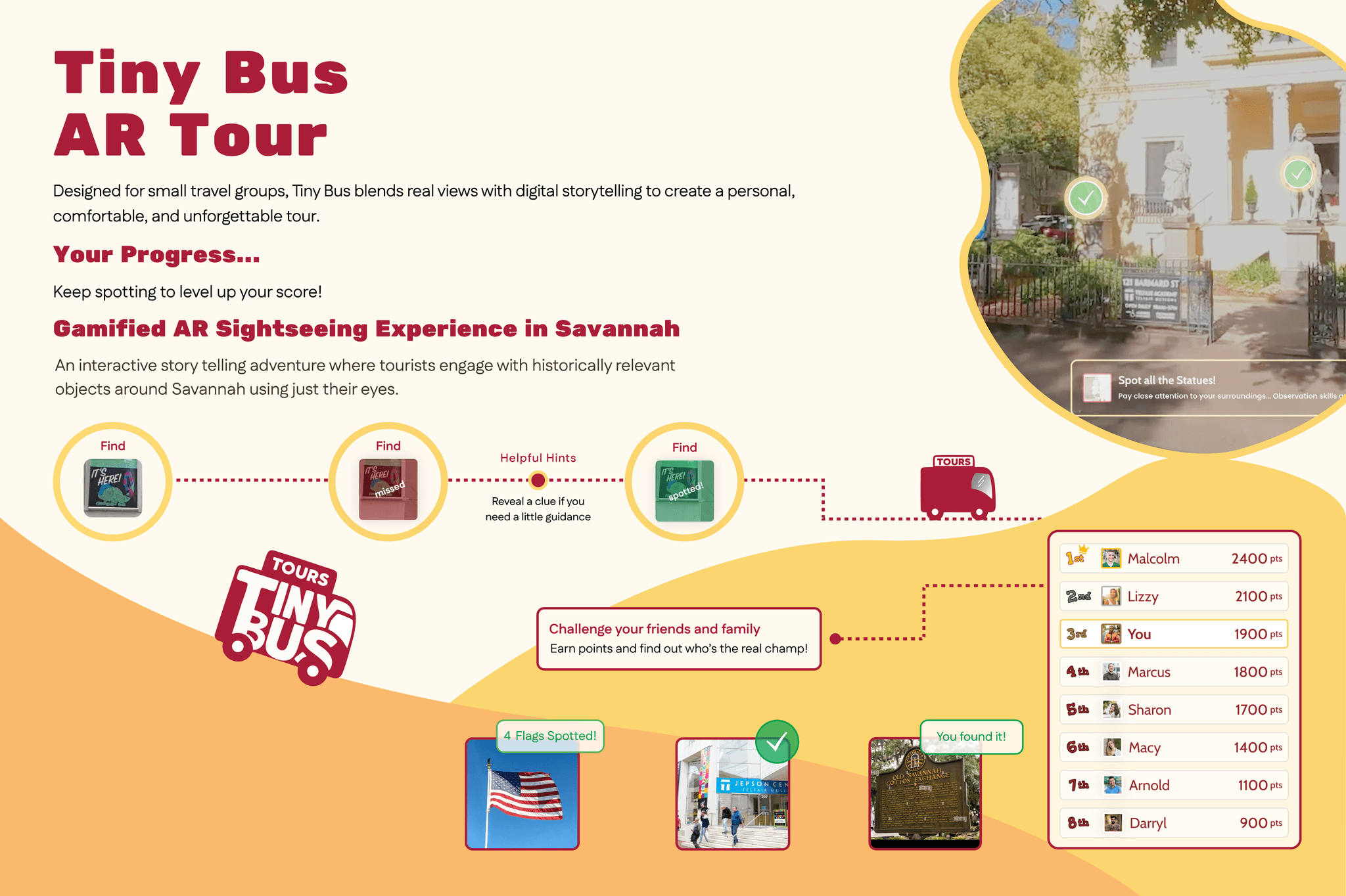
Tiny Tour Bus Project explores how augmented reality can transform traditional bus tours into a more engaging and interactive experience. Instead of relying on one way audio guides, the design introduces AR windows that overlay historical details, hidden visual elements, and storytelling directly onto real world views.
Designed for small groups of 4~6 travelers, the experience shifts sightseeing from passive listening to active participation, allowing users to discover and understand their surroundings in a more immersive way. By combining physical travel with digital interaction, the project creates a more memorable, personalized, and premium way to explore Savannah.
PROJECT DETAILS
Roles
UX Designer / UX Researcher
Duration
10 Weeks
Team
Cobalt Arnold / Sumant Rajkumar / Harper Schutte / Rain Agbabiaka
Tools
HTML / Java Script / CSS / Figma
The Problem
Problem Statement
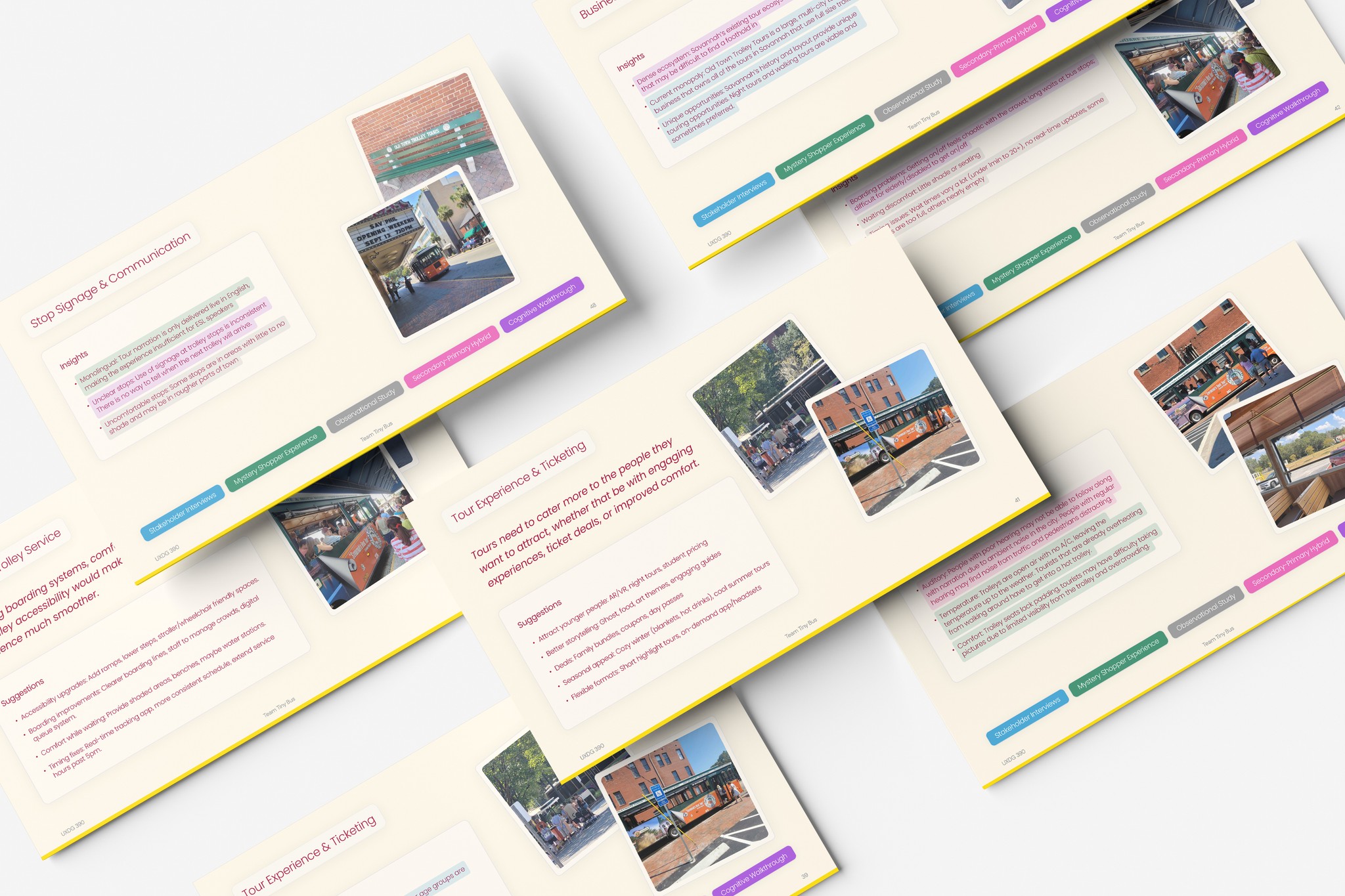
Trolley tours were designed to educate and transport tourists around the city. We have observed that small groups
(4-6 people) are being split up, the content and delivery are not engaging, and the physical tour experience is
uncomfortable. As a result, customers are less likely to recommend the tour.
How Might We…
How might we help small groups experience tours that are both immersive and inclusive through the use of emerging technology in a way that every visitor feels connected, informed, and considered, ultimately driving greater satisfaction and repeat attendance?
Our Goal
To create an immersive and interactive tour experience for small groups by enhancing engagement, comfort, and connection through AR.
Research Method
Method
Stakeholder Interview
Observation Study
Mystery Shopper Experience
Cognitive Walkthrough
Secondary - Primary Hybrid
How
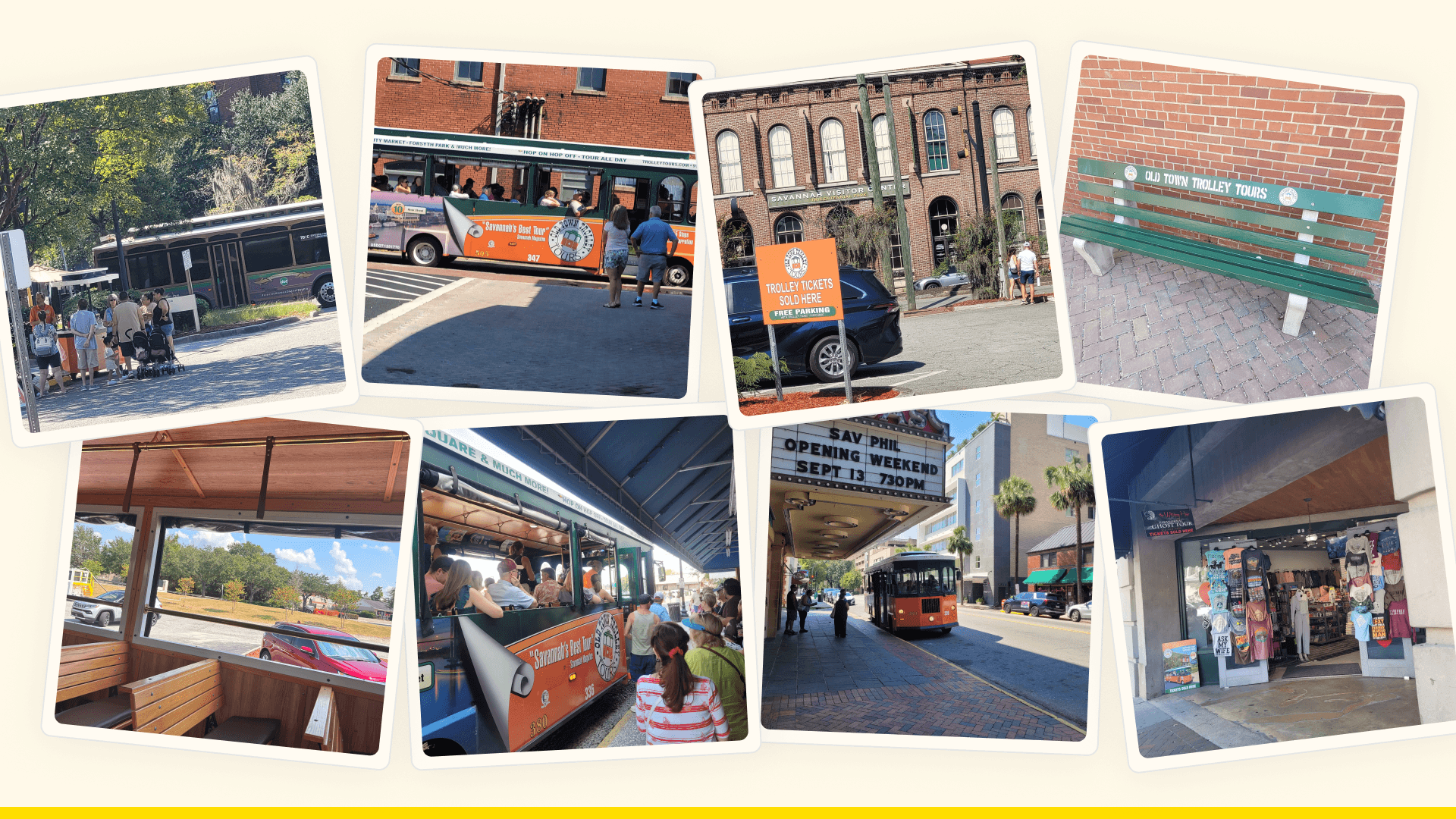
We rode the Savannah tour bus ourselves, interviewed passengers who had taken the tour, and walked along the tour route to better understand the experience. We also created a screener survey to recruit participants and conducted interviews to learn about people’s perceptions of bus tours.
Opportunity Area
We defined opportunity areas based
on user research, explored a range of ideas through structured brainstorming, and identified potential innovation opportunities using emerging technologies.
Tiny Bus Concept
Overall Concept
Tiny Bus Tour with AR window transforms Savannah's trolley tour into a small group, unforgettable experience. Designed for 4-6 travelers, it uses augmented reality windows to overlay historical building details, hidden picture puzzle, and live storytelling onto real-word views, bringing Savannah's layered history to life in a personal, immersive and memorable way.
Key Features
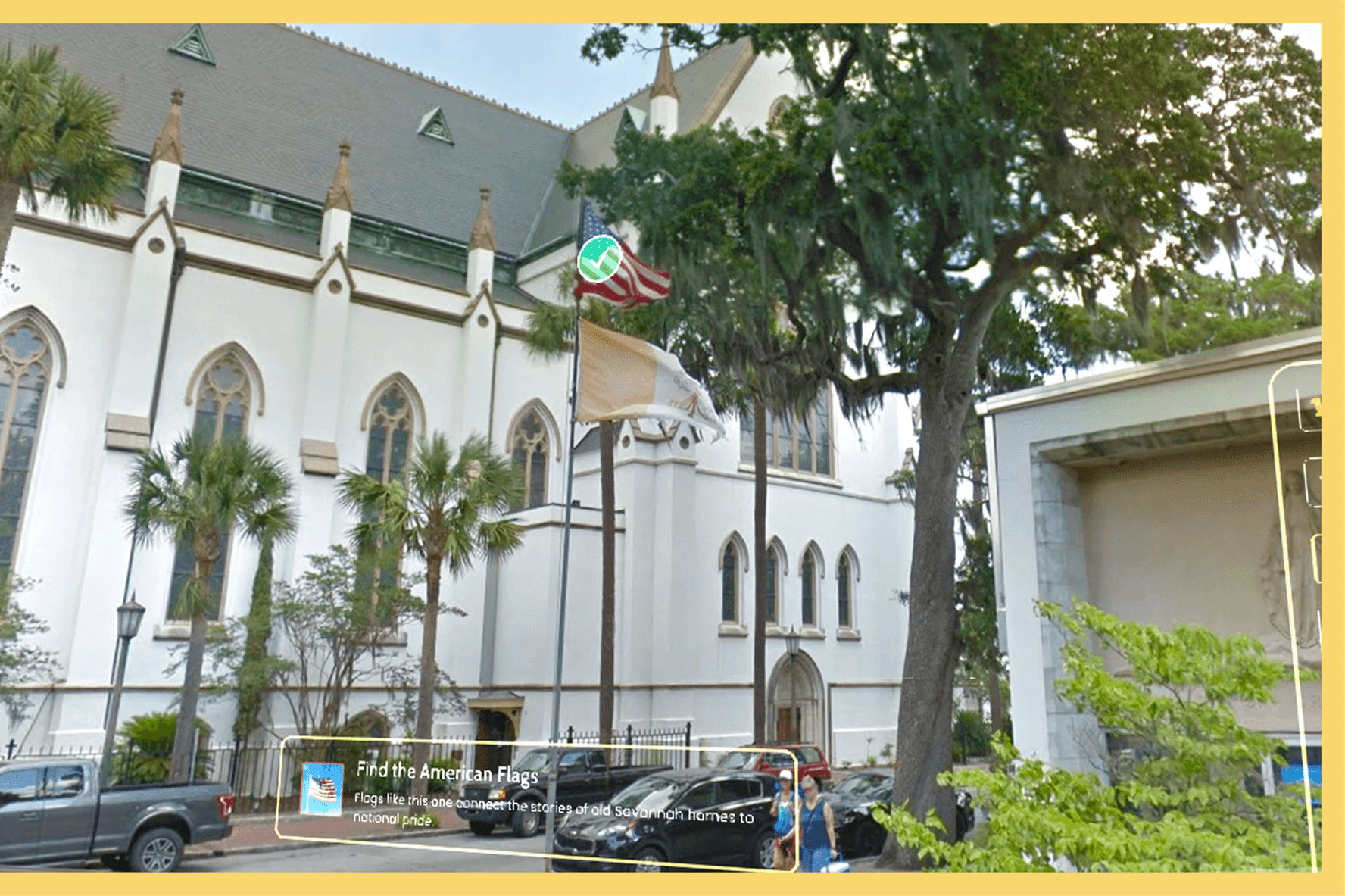
Augmented Reality Windows: Display live overlays of historical buildings, photos, and cultural stories directly onto real world views.
Interactive Story Moments: Trigger short AR animations or character reenactments as the bus passes key landmarks.
Smart Tour Sync: Auto synchronizes AR content with GPS location and route timing for seamless storytelling.
Group Viewing Mode: Designed for 4–6 passengers, allowing everyone to experience the same AR narrative simultaneously.
Accessibility Options: Includes captioning, live translation, and audio narration controls for inclusive experiences.
Eye / Head Tracking: Playfully enjoy the game and explore information near the tour bus window, allowing passengers to easily and playfully enjoy the game and explore information.
How It Works? Why It Matters?
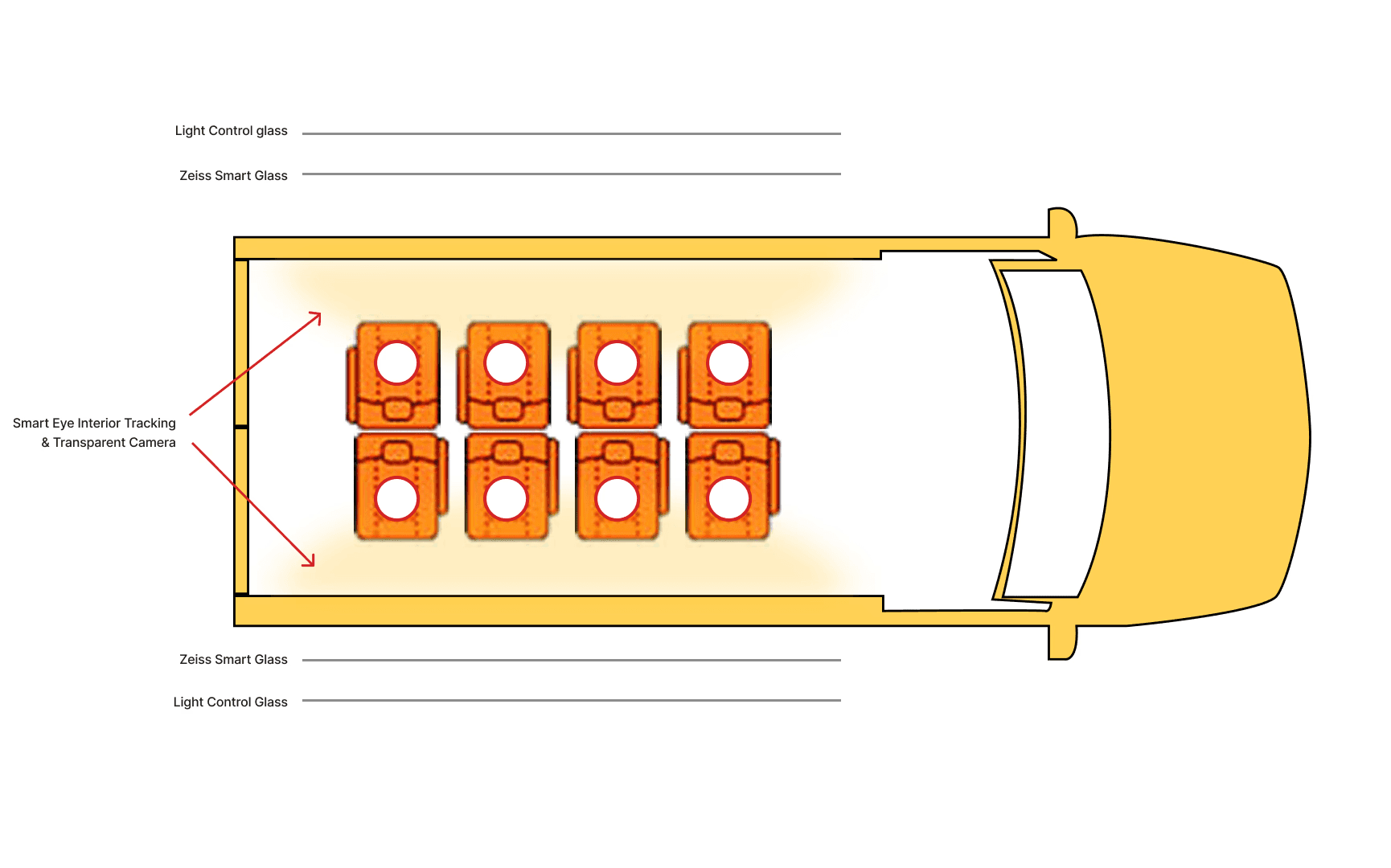
Tourgoers face outward toward the windows. The windows use Samsung MICROLED technology to
display graphics that are controlled live with a
repurposed version of Pixotope Zone. Within the cabin, Tobii eye-tracking hardware is placed below each window.
Final Design
How Did We Conduct Usability Testing?
We conducted usability testing using the eye-tracking feature available on the MacBook. Although it was not an actual bus window, participants interacted with the computer screen using only their eye movements, allowing us to simulate a realistic, hands free viewing experience.
User Journey
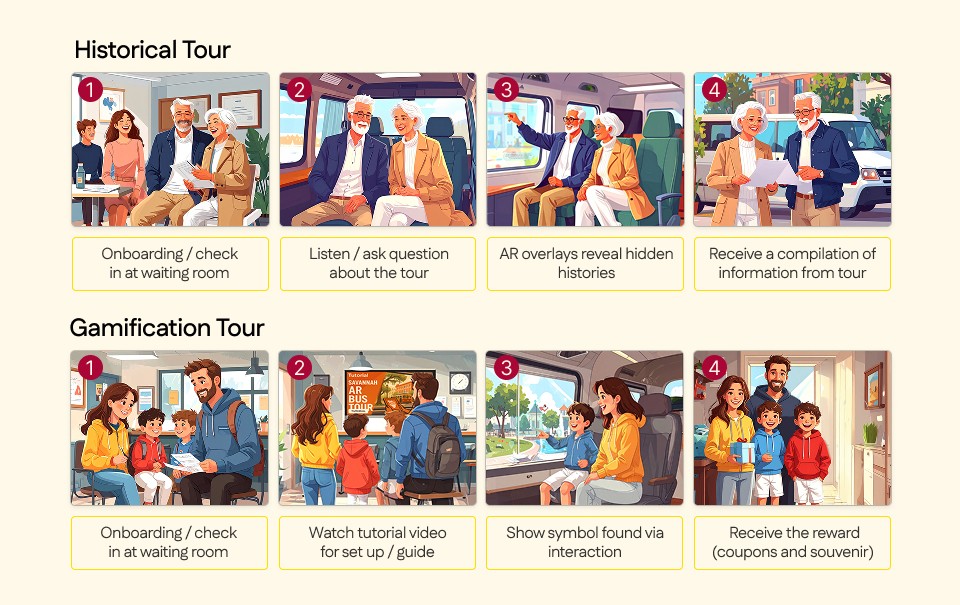
Arrival & Check-In: receive a brief tutorial about the AR experience.
Boarding Introduction: Receive a brief introduction to the interactive tour.
AR Exploration Begins: AR content overlays stories and information onto real-world landmarks.
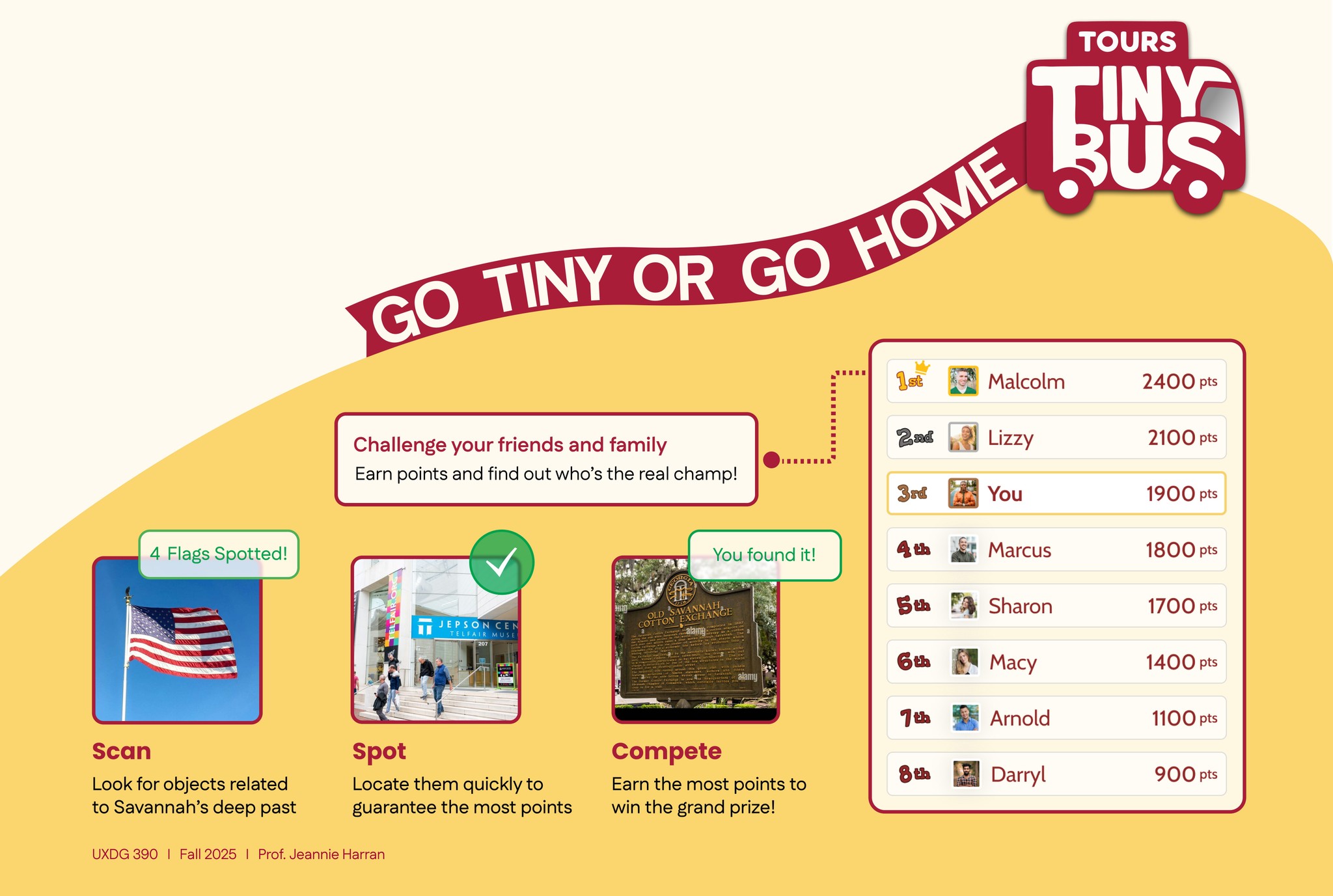
Interactive Engagement: Engage by identifying symbols, solving puzzles, and interacting with AR elements.
Progress & Feedback: Users receive real-time feedback through points and a scoreboard.
Completion & Reward
Impact & Outcome
A more immersive experience
A memorable travel experience
Increased likelihood of recommendation
Reflection