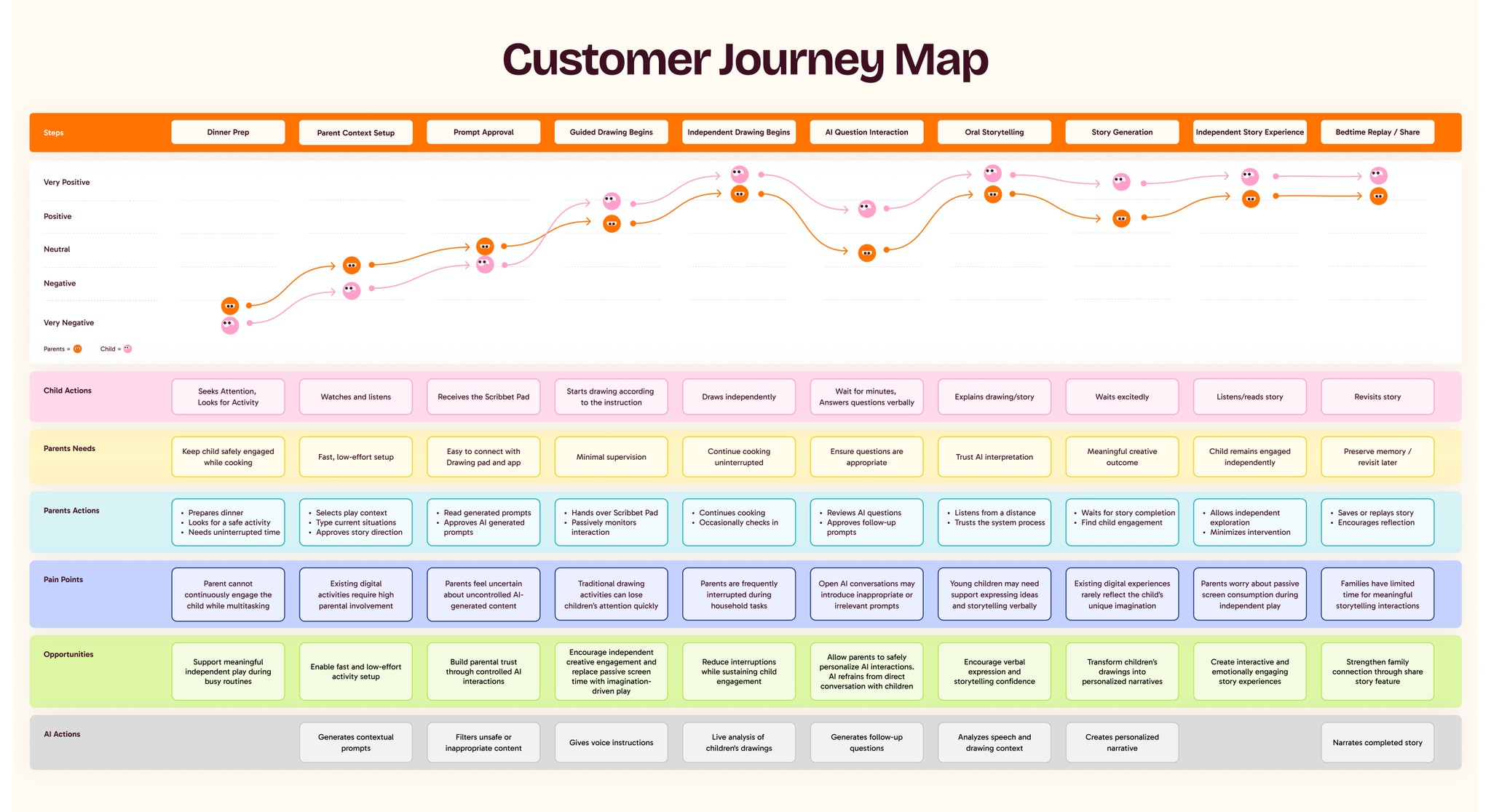
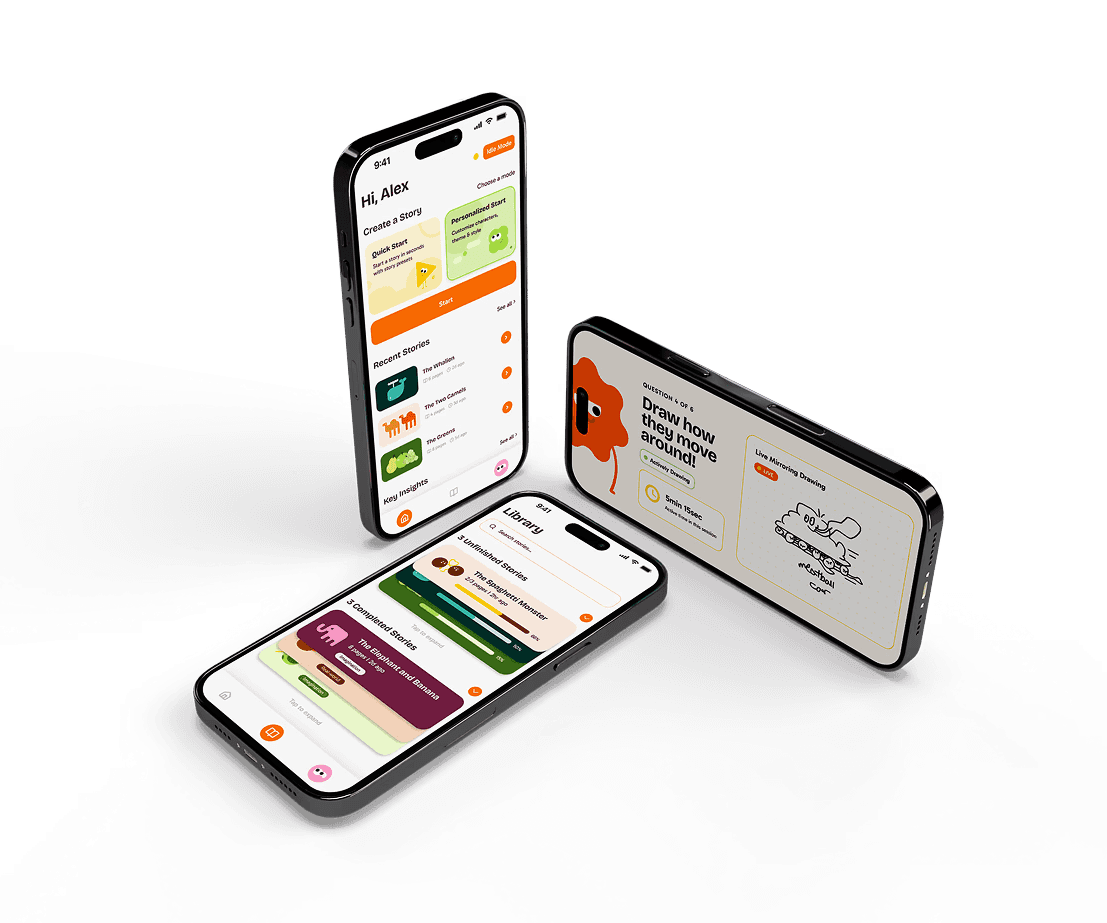
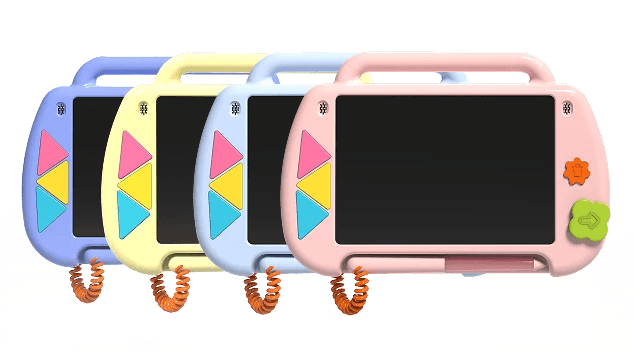
Scribbet is a context-driven drawing tablet and companion app that turns everyday moments into creative storytelling prompts, helping children stay engaged without relying on traditional screens. Designed with child-safe AI, it supports independent play, passive parental involvement, and transforms drawings into personalized storybooks. I focused on designing intuitive interactions that seamlessly connect physical drawing with AI-generated storytelling.
PROJECT DETAILS
Roles
UX Lead / UI Designer
Duration
20 Weeks / In Progress
Team
Sara Banny / Amisha Patel / Harper Schutte / Jiwoo An
Tools
Figma / Illustrator / Solidworks / Keyshot / Rhino / Claude Code + Cursor
The Problem

Problem Statement
In everyday home environments, parents raising young children often struggle to balance screen use with screen free play.
This challenge is most pronounced during low energy, high-demand moments leading to screens being as reliable distractions to occupy the child. Current digital experiences are difficult to manage and raise concerns due to AI-driven algorithms that can unintentionally push inappropriate content. Consequently, screen time shifts from being a safe, intentional aid for healthy development to a source of conflict and compromise within families.
Design Challenge

How Might We…
How might we design a toy that supports parents across varying contexts by dynamically tailoring a child's play to the parent's activity, making engagement feel natural and low-effort?
Project Goal
Create a new toy that engages kids without overstimulating
screen use, while still providing convenient support for parents.
Research Method
Methods
Survey
Interviews
Contextual Inquiry
We Conducted…
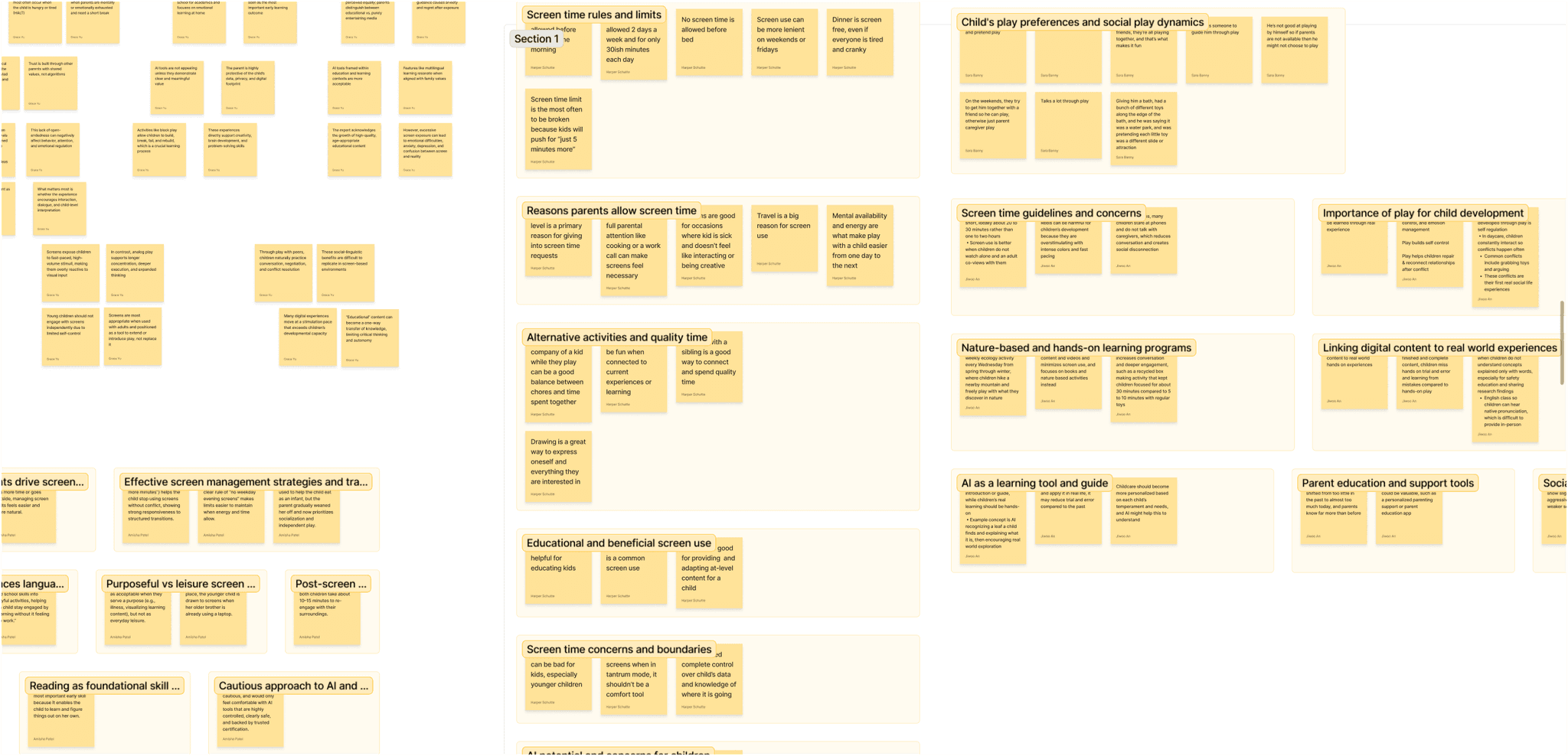
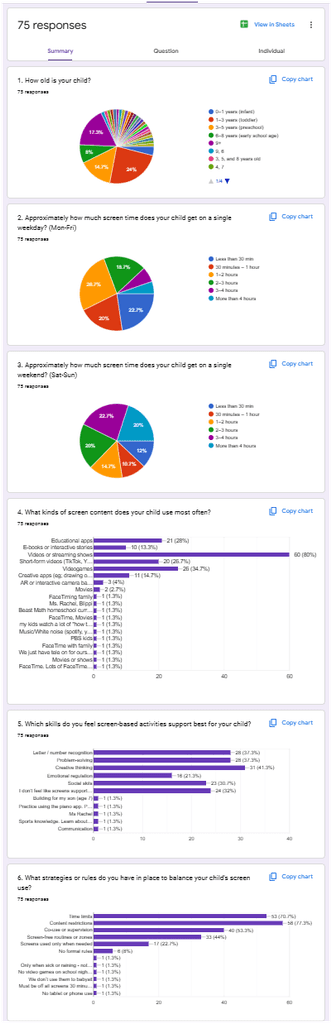
75 survey Responses
12 Caregivers Interviews
5 Education Experts Interviews
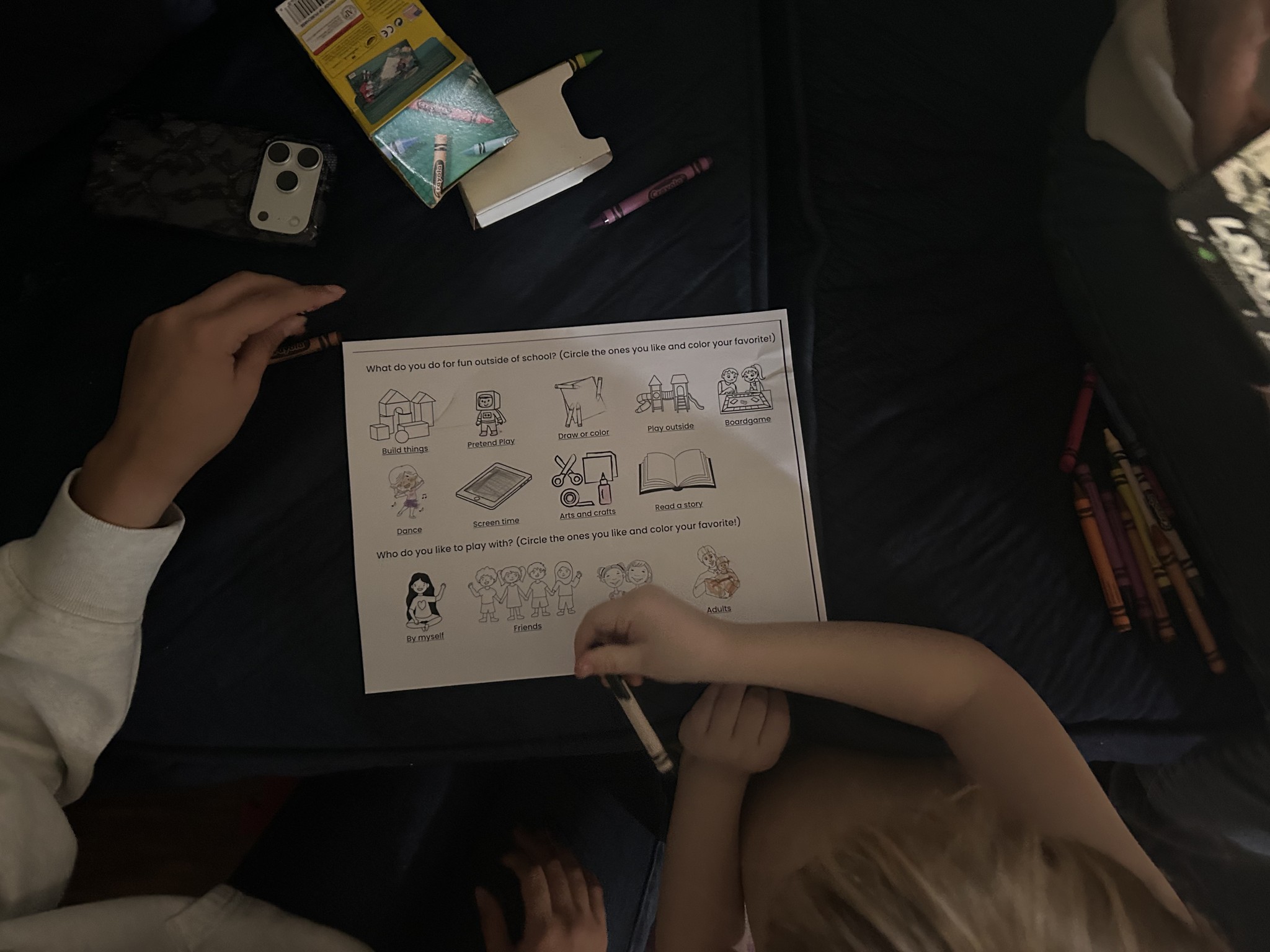
2 Contextual Inquiry
Why
To understand real world parenting
contexts, validate developmental needs
and observe authentic child behaviors
beyond self-reported Insights
Survey Insights
Key Insights
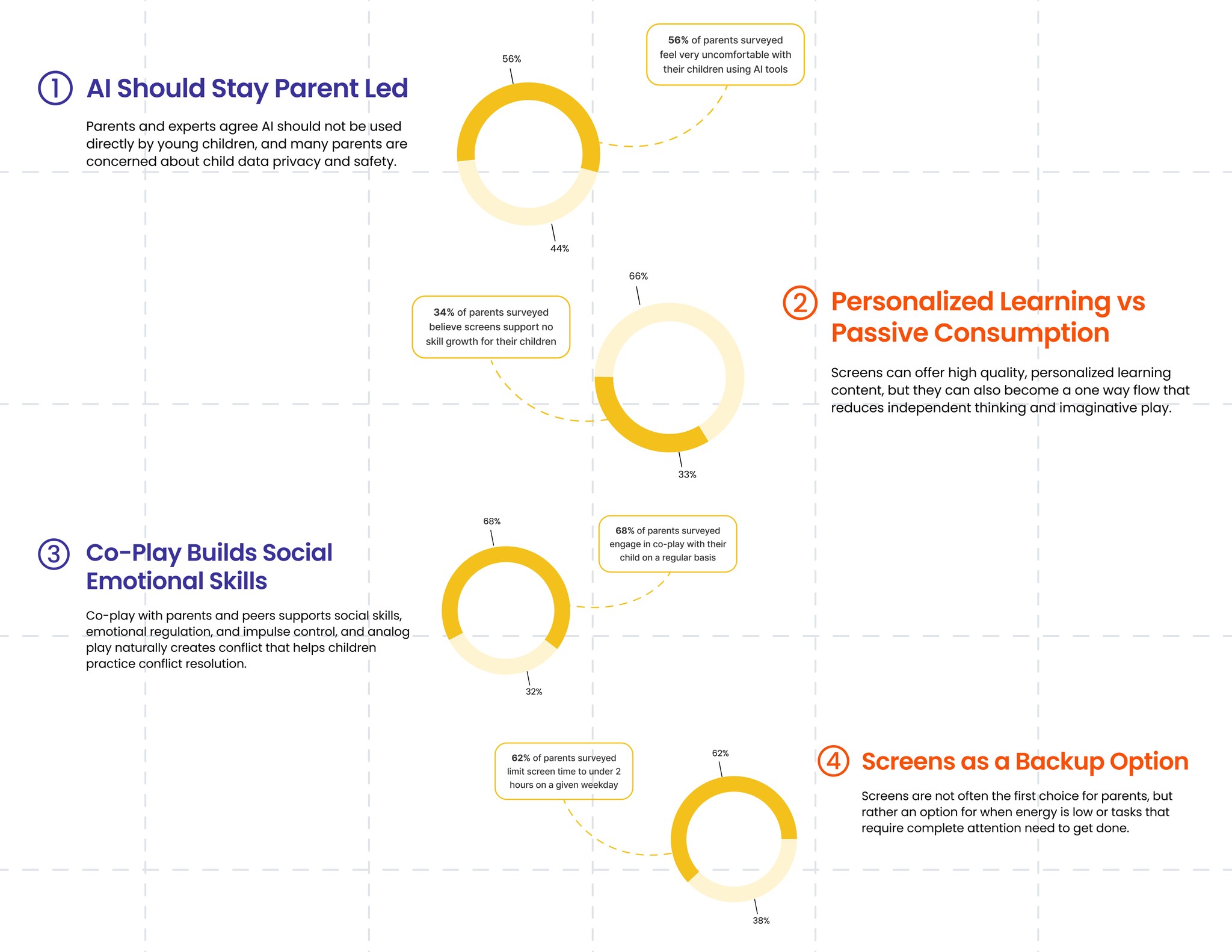
Parents prefer AI to be mediated, not child-facing
Screens are useful but risk passive consumption
Co-play is critical for social and emotional development
Screens are often used as a fallback, not a primary choice
Parents feel uneasy about children using AI tools
Parents want control without constant involvement
The real problem isn’t screens it’s lack of meaningful alternatives
There is a tension between convenience and developmental value
Play is more valuable when it becomes shared meaning
Interview Insights
Education Experts Interview
Active, hands-on play is essential for cognitive and social
development
Passive screen content limits independent thinking and
creativity
High-engagement screens can reduce flexibility in
attention and behavior
Parent Interview
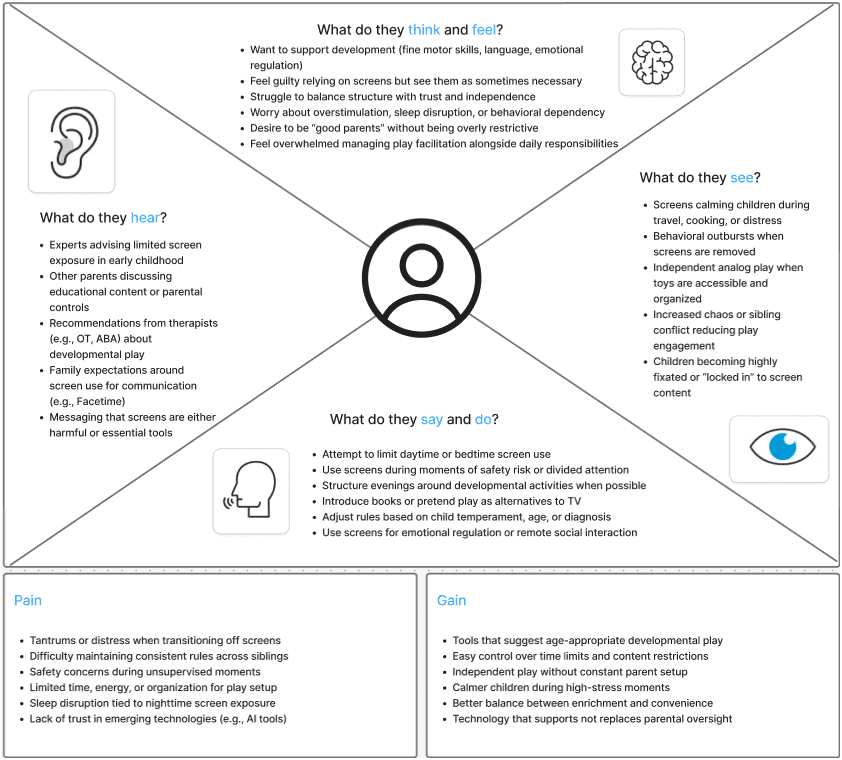
Children struggle to sustain independent play without guidance or interaction
Screen time is often driven by parental fatigue
Parents prioritize content quality and safety over limiting screen time alone
Parents need structured guidance, not just free play options
Contextual Inquiry Insights
Contextual Inquiry Findings
Screens were primarily used as regulation and safety
tools during high-demand moments (cooking or car rides)
The biggest challenge was not screen time itself, but the emotional transition when were taken away
Parents expressed discomfort and guilt around relying on
screens for daily routines
Offline Play & Creativity Insights
Both children demonstrated strong imagination and creative engagement without screens
Activities such as storytelling, pretend play, drawing, and crafts naturally sustained attention
Creative play became more meaningful when children could explain or expand on their ideas verbally
Design Concept